
Core philosophy
Sonic Panel focuses on stable, simple, hosting-friendly station management. AzuraCast focuses on open-source flexibility and advanced station control.
Running an internet radio station is easier than ever, but the control panel you choose affects your day-to-day workflow, AutoDJ setup, live broadcasting, server performance and long-term growth.


Written for customers who just want the task done without the jargon.
Use it as a checklist while you work through the panel.
Includes reminders for passwords, backups, SSL, DNS and live services.
Open a ticket if the screen looks different or you want us to check it.
Made for websites, radio streams and customer-facing services.
This comparison is written for station owners who want a practical answer, not a platform argument. Sonic Panel is usually the simpler hosted-radio route; AzuraCast gives more control and deeper automation. The right choice depends on who will manage the station day to day and how advanced your setup needs to be.
Use this as a fast starting point before reading the full breakdown.
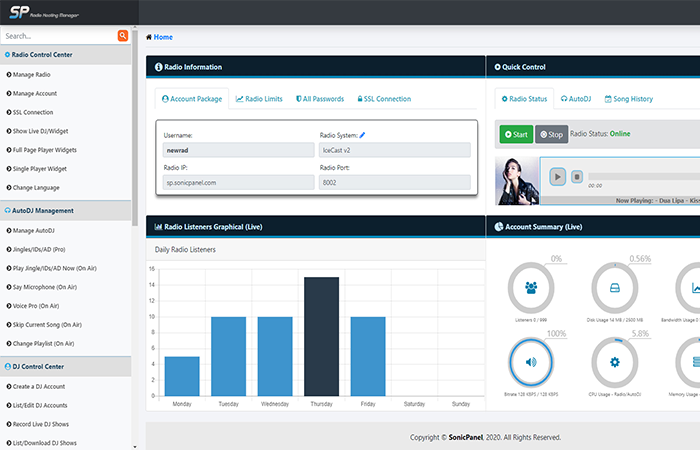 Simple & stable
A streamlined commercial radio panel built for stability, fast setup, reseller hosting and easy station management.
View details →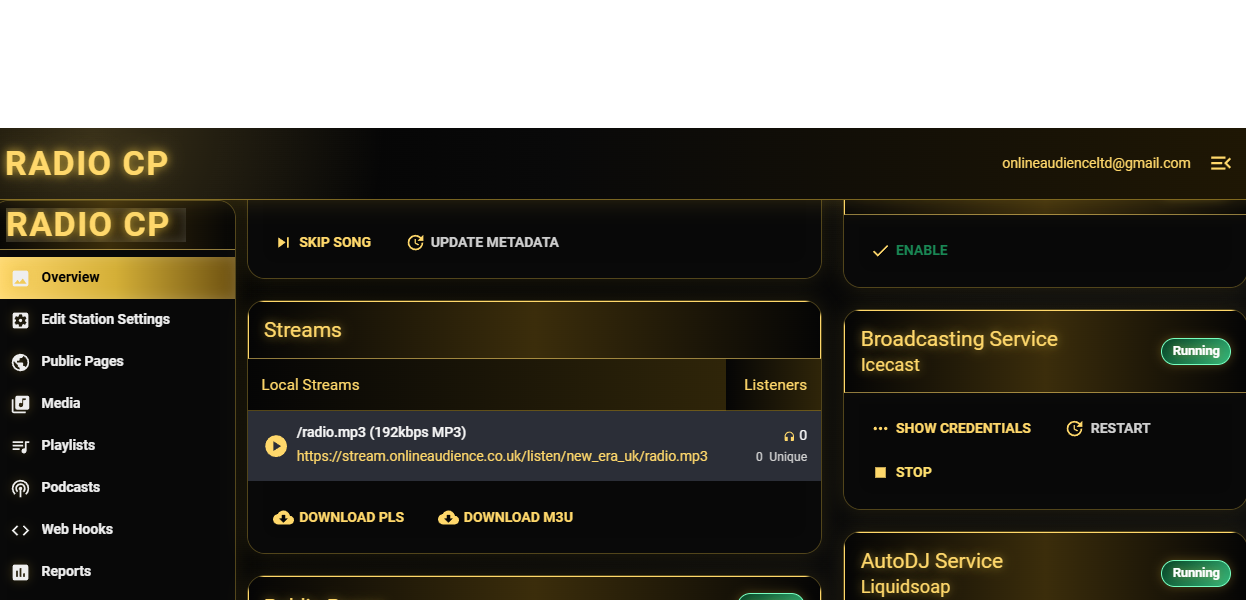 Advanced & flexible
A modern open-source broadcasting platform with deep automation, Web DJ tools, API access and Docker-based flexibility.
View details →If you want a faster route to launch with less configuration, a simple managed Sonic Panel plan can be easier to start with.
View details →If you want advanced playlist logic, Web DJ and API-driven station experiences, AzuraCast can be a powerful route.
View details →Sonic Panel focuses on stable, simple, hosting-friendly station management. AzuraCast focuses on open-source flexibility and advanced station control.
Sonic Panel is direct and easy to understand. AzuraCast is modern and powerful, but includes more settings and a steeper learning curve.
Sonic Panel is practical for everyday automation. AzuraCast offers deep Liquidsoap-powered playlist logic, scheduling and advanced automation rules.
Both support live broadcasting, but AzuraCast includes browser-based Web DJ options while Sonic Panel keeps live workflows simple and familiar.
Sonic Panel is known for being lightweight. AzuraCast offers powerful features but typically needs more server resources, especially for heavier automation.
Sonic Panel is a commercial panel with structured hosting support. AzuraCast has a strong community setup, with managed support available through Online Audience.
| Area | Sonic Panel | AzuraCast |
|---|---|---|
| Best for | Fast commercial radio hosting, resellers, simpler station management | Advanced automation, API projects and technical broadcasters |
| Interface | Clean, practical and straightforward | Modern, detailed and feature-rich |
| Learning curve | Lower | Medium to higher |
| AutoDJ | Reliable playlists, scheduling and easy upload workflows | Advanced Liquidsoap-powered smart playlists and scheduling |
| Web DJ | Traditional encoder-friendly live workflow | Built-in browser-based Web DJ tools |
| Server resources | Lightweight and efficient | More resource-heavy because of Docker and advanced audio processing |
| Support style | Managed hosting support from your provider | Community support plus managed help from Online Audience |
| Good choice if | You want to launch quickly and focus on content | You want deeper control, APIs and advanced station behaviour |
Sonic Panel is designed around stability, simplicity and hosted radio environments. It is a commercial-grade platform made to help station owners and radio hosting providers get live quickly without needing to manage complicated server-side details.
For many stations, that is exactly what they need. They want to upload tracks, manage AutoDJ, provide DJ access, view listener information and keep the stream online without spending hours learning advanced server configuration.
AzuraCast is popular because it gives broadcasters a modern, open-source control panel with deep automation features. It is built around Docker and includes powerful tools for station management, playlist logic, Web DJ broadcasting, APIs and public player data.
That power is useful, but it also means the platform can feel more advanced at first. Broadcasters who enjoy control, configuration and integration options usually appreciate what AzuraCast offers.
A radio control panel is not only for technical staff. Presenters, volunteers, station managers and content teams may all need access. Sonic Panel’s straightforward workflow can make onboarding easier for non-technical users.
AzuraCast has a polished modern interface, but because it contains more advanced options, users may need more guidance during the early stages. For technical operators, that depth is a benefit. For casual users, it can feel like a lot to absorb.
Sonic Panel is strong for practical AutoDJ hosting: upload tracks, build playlists, manage schedules and keep the station live when no presenter is connected. It is a dependable choice for everyday radio operations.
AzuraCast’s Liquidsoap-powered AutoDJ can go deeper. It can support advanced playlist rules, richer scheduling logic and Web DJ broadcasting directly through the browser, which is valuable for stations wanting more flexible programming.
Sonic Panel is lightweight and efficient, making it attractive for hosted plans and larger listener numbers where the station owner wants predictable performance.
AzuraCast can require more resources because of Docker, Liquidsoap and its broader feature set. That does not make it a bad choice; it simply means the hosting environment should be sized properly if the station expects heavy automation or larger growth.
Choose Sonic Panel when you want a lightweight, stable and easy-to-use platform that lets you focus on content instead of configuration. It works especially well for new stations, resellers and broadcasters who want a clear commercial hosting route.
Choose AzuraCast when you want advanced features, modern workflows, Web DJ tools, API flexibility and deeper control over how your station behaves. It suits technical broadcasters and stations planning custom digital experiences.
Still unsure? Online Audience supports both routes, so you can ask for guidance before choosing your plan.
A platform can have amazing features and still be the wrong fit if nobody on the team wants to maintain it. Think about presenters, volunteers, managers and whoever gets the support call when something goes quiet.
Sonic Panel is often better when you want a straightforward hosted station with familiar AutoDJ and DJ workflows. AzuraCast is often better when you want more flexible automation, Web DJ, API options and a modern open-source style of station management.
Explore both platforms and the wider radio hosting setup.
Tell us how your station works and we will point you toward the best route for your presenters, listeners and growth plans.

