What you are doing
A clear explanation of the setup, what each part does, and why the checks afterwards matter.
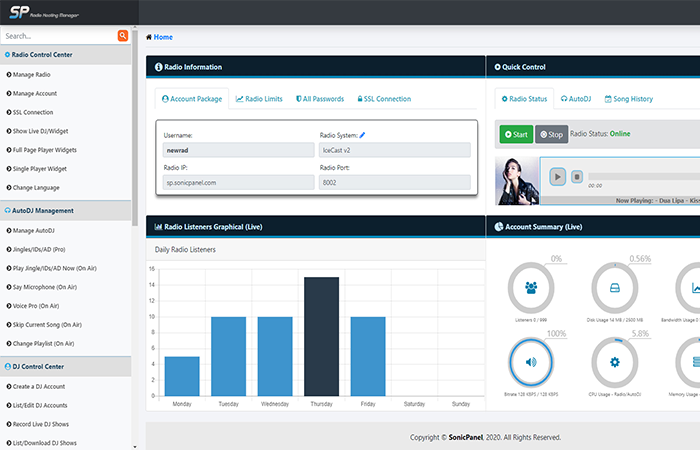
Create secure DJ accounts in Sonic Panel so presenters can broadcast live without using the main station password.

Written for customers who just want the task done without the jargon.
Use it as a checklist while you work through the panel.
Includes reminders for passwords, backups, SSL, DNS and live services.
Open a ticket if the screen looks different or you want us to check it.
Made for websites, radio streams and customer-facing services.
Create secure DJ accounts in Sonic Panel so presenters can broadcast live without using the main station password. We have expanded this guide with a bit more context, friendlier wording and practical checks so you know what to do before, during and after the change.
A clear explanation of the setup, what each part does, and why the checks afterwards matter.
Common mistakes, missing settings and small details that can make a simple task feel broken.
Clear prompts for when it is safer to open a support ticket instead of guessing on a live service.
Most Sonic Panel tasks are simple once you know where the option lives. Keep the current page open, change one setting at a time and test the stream or playlist before moving to the next step.

This guide is for people who want to get the setup done without getting lost in control-panel wording.
Sonic Panel is designed to be fairly straightforward, but it still controls a live radio service. That means small changes can affect what listeners hear, what presenters can access, or whether automation keeps playing when nobody is live.
Before making changes, check which station account you are inside, whether AutoDJ is currently live, and whether any presenter is due to connect soon. If your station has volunteers or scheduled shows, it is worth testing during a quiet period rather than five minutes before a broadcast.
Individual DJ accounts are safer than sharing the main station login. They also make it easier to remove access later without changing every station password.
Work through the steps in order. Do not worry if your screen is not identical; hosting panels can look slightly different depending on the theme, package and permissions on your account.
The aim is simple: Create secure DJ accounts in Sonic Panel so presenters can broadcast live without using the main station password. The important part is to make one clear change at a time, then test it before moving on.
If you are doing this for a live website or station, pick a quieter time where possible. That gives you room to test without putting unnecessary pressure on the service.
Only give each presenter the access they need. Most DJs do not need admin rights to the whole station.
The usual Sonic Panel headaches are simple things: the wrong password sent to a presenter, AutoDJ not started, a playlist with no tracks, a stream key pasted into the wrong box, or a browser blocking microphone access. Take it one step at a time and test the public player after each important change.
This is the bit most short guides skip, but it is usually where the fix is. Before changing lots of settings, check the basics: correct account, correct domain or station, saved settings, clean password, and a fresh test from another browser or device.
A control panel saying something is saved is only half the job. The real test is whether the website, mailbox, stream, player, presenter login or public page behaves properly for the people using it.
Once you are happy, keep a short note of what you changed. It makes future troubleshooting much easier, especially if more than one person works on the station or website.
If the panel looks different, the option is missing, or you are worried about touching a live service, send us a ticket with the account, domain, station name or screenshots. We can point you in the right direction or advise on the safer route.
For anything involving DNS, SSL, migrations, live radio, mail delivery, databases or customer-facing websites, a ticket is usually better than guesswork because it gives everyone a clear record of what changed.
Continue learning or choose a service path that fits your setup.
Online Audience helps broadcasters, businesses and creators manage hosting, streaming, websites and support routes from one professional service provider.